Seismic Survey 2D/3D

A seismic source-such as sledgehammer-is used to generate seismic waves, sensed by receivers deployed along a preset geometry (called receiver array), and then recorded by a digital device called seismograph. Based on a typical propagation mechanism used in a seismic survey, seismic waves are grouped primarily into direct, reflected, refracted, and surface waves.
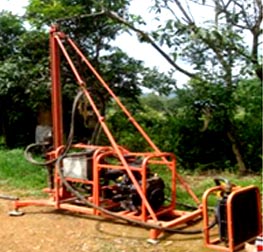
There are three major types of seismic surveys: refraction, reflection, and surface-wave, depending on the specific type of waves being utilized. Each type of seismic survey utilizes a specific type of wave (for example, reflected waves for reflection survey) and its specific arrival pattern on a multichannel record. Seismic waves for the survey can be generated in two ways: actively or passively. They can be generated actively by using an impact source like a sledgehammer or passively by natural (for example, tidal motion and thunder) and cultural (for example, traffic) activities. Most of the seismic surveys historically implemented have been the active type. Seismic waves propagating within the vertical plane holding both source and receivers are also called inline waves, whereas those coming off the plane are called offline waves.
Our Seismic Services include.
- Land Seismic Acquisition
- Transition Zone Acquisition
- Marine Seismic Acquisition
- Data Processing & Imaging
- Borehole Seismic
- Multiclient Seismic
- Seismic Consulting & Interpretation
- Wireless Seismic, data acquisition in real time